
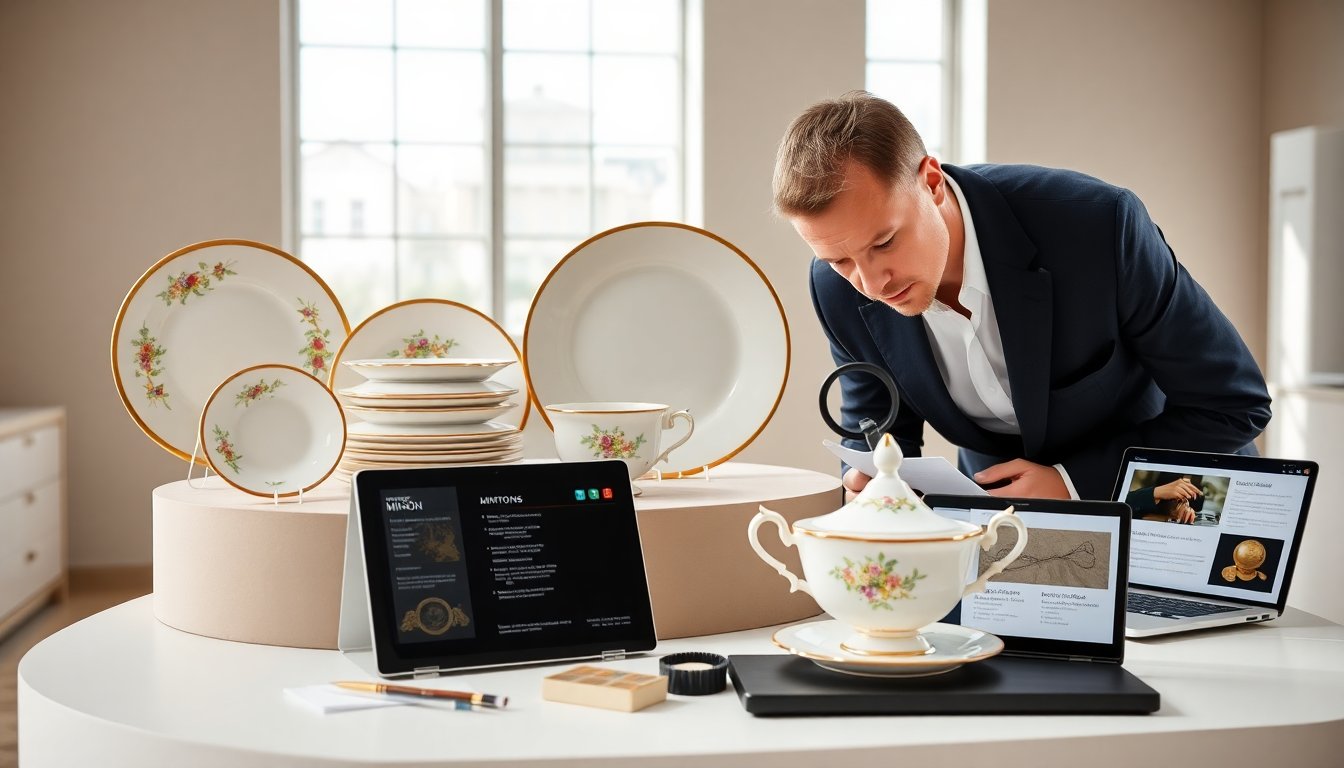
Mintons Lexington remains a sought-after pattern among collectors and dealers. The guide explains origin, key design traits, and basic care. It shows how to spot authentic marks and how condition affects price. It helps readers find trusted sellers and resources. It keeps advice clear and practical for anyone handling or valuing Minton’s Lexington pieces.
Key Takeaways
- Mintons Lexington is a prized 19th-century porcelain pattern known for its floral sprays, gilt rims, and Victorian design elements.
- Authentic Minton’s Lexington pieces feature underglaze marks with motifs like crossed swords or crowns, and exhibit fine hand-painted floral details and consistent pattern layouts.
- The value of Minton’s Lexington depends heavily on condition, rarity, age, and completeness, with intact sets and marked provenance commanding premium prices.
- Common damage includes cracks, chips, and gilding loss, so professional, reversible restoration by conservators is recommended to maintain value.
- Collectors and buyers should use trusted auction archives, museum references, specialist dealers, and collector forums to authenticate, value, and find genuine Minton’s Lexington pieces.
History And Design Features Of Minton’s Lexington Pattern
Minton’s Lexington refers to a porcelain dinnerware pattern that Minton produced in the 19th and early 20th centuries. The firm made floral sprays, scrolling borders, and gilt rims that appeal to Victorian and Edwardian tastes. Collectors often note a soft white ground, warm overglaze colors, and fine hand-painted detail. The pattern saw variations in plate shapes, soup tureens, and teaware. Minton used high-quality bone china and hard-paste porcelain at different times, and that fact affects weight and translucence. Dealers record peak Minton production dates between 1840 and 1910, though the firm continued later runs and reproductions. Knowing the era helps buyers set expectations for design motifs and glazing. Provenance, original box, or retail labels add historical value. Minton’s Lexington often appears with complementary serving pieces, which increases set value. Collectors value intact gilding and crisp painting more than minor pattern differences.
How To Identify Authentic Minton’s Lexington Pieces (Marks, Shapes, And Decoration)
Authentic Minton’s Lexington items usually carry a factory mark on the underside. The mark often reads “Minton” with a crossed swords or crown motif and sometimes shows an impressed number. Buyers should look for underglaze or impressed marks rather than only surface stamps. The pattern layout stays consistent across plates: central floral sprays or cartouches with repeating border scrolls. The shapes follow standard Victorian forms: low plates, deep soup plates, and handled cups with fine handles. The glaze has a slight depth and faint crackle on very old pieces. Brush strokes in the flowers appear deliberate and varied. Experts test translucence by holding thin pieces to light: real bone china shows a warm glow. Reproductions use flat decal transfers and lack layered brushwork. Weight feels right in hand for age and material, and gilding shows wear only at expected contact points. Authentication benefits from a loupe, reference books, and comparison with verified museum examples.
Estimating Value: What Determines The Market Price For Minton’s Lexington
Value for Minton’s Lexington depends on condition, rarity, age, and completeness of sets. A single dinner plate in good condition sells for less than matching multi-piece sets. Auctions show that intact service sets and rare forms command premiums. Buyers pay more for pieces with clear factory marks and known provenance. Damage lowers price sharply: cracks, chips, and heavy restoration reduce value by 30 to 80 percent depending on severity. Market trends also matter: taste for Victorian patterns can rise or fall over years. Rarity raises value when few examples of a form survive. Pattern variants with unique borders or color ways attract specialist collectors. Regional demand affects price too, and certain markets pay higher bids for English porcelain. Appraisers use comparable sales and condition notes to set estimates. For insurance values, professionals recommend documented sales records and recent auction results.
Common Repairs, Condition Issues, And Professional Restoration Tips
Collectors find common issues on Minton’s Lexington pieces: hairline cracks, rim chips, old glue repairs, and loss of gilding. Experts advise documenting damage before any work. Professionals remove old adhesive and fill chips with conservation-grade materials that match thermal expansion rates. Restorers use reversible fillers and color-matched paints under magnification. Over-cleaning removes original glaze patina and lowers value, so handlers should avoid harsh abrasives. Minor crazing often remains stable and does not always need repair. If structural repair matters, use a conservator who specializes in porcelain. Conservators record methods and materials and provide a report. Buyers should ask for those reports when evaluating restored pieces. Transparent restoration increases buyer confidence and often preserves most market value compared with hidden or amateur work.
Where To Buy, Sell, Or Research Minton’s Lexington — Trusted Resources And Marketplaces
Collectors research Minton’s Lexington through museum catalogs, auction house archives, and specialist books. Major auction houses list past sale results online, which help set price ranges. National museums with decorative arts collections publish verified examples and high-resolution images. Trusted antique dealers who specialize in English porcelain offer vetted inventory and condition reports. Online marketplaces list many pieces, but buyers should demand clear photos of marks and close-ups of damage. Collector forums and Facebook groups provide peer feedback and spotting tips. Local antique fairs and estate sales still yield good finds for patient buyers. For selling, consigning with an auction house or using a specialist dealer delivers better exposure for rare sets. Professional appraisers and independent conservators provide written valuations and restoration estimates. Records, clear provenance, and condition notes speed sales and increase final prices.