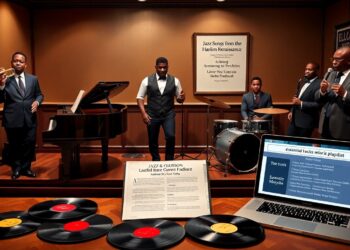

Jazz Harlem Renaissance defined a new public culture in New York. Black musicians mixed blues, ragtime, and improvisation. Harlem residents created music that spoke of daily life and ambition. Writers and artists listened to jazz and responded. Audiences gathered in clubs and halls. The music moved people and changed tastes across the United States. This article explains how jazz influenced social life, artistic forms, and public identity during the Harlem Renaissance.
Key Takeaways
- Jazz during the Harlem Renaissance served as a powerful expression of Black identity and modernity by blending African rhythms with European harmony.
- Harlem’s vibrant social scene fostered jazz musicians who innovated with brass sections, walking bass lines, and improvisation, influencing national music styles.
- Iconic figures like Louis Armstrong and Duke Ellington set standards for jazz soloing, composition, and vocal phrasing, shaping the genre’s future.
- Jazz venues such as the Cotton Club and the Savoy were central to Harlem’s cultural life, showcasing Black talent and influencing social dynamics.
- Jazz deeply influenced other art forms—literature, visual arts, and dance—by inspiring new rhythms, metaphors, and creative expressions.
- The Harlem Renaissance’s jazz legacy endures through modern jazz, educational programs, and cultural memory emphasizing its role in American music and civil rights.
The Social And Cultural Context Of Harlem In The 1920s
Harlem grew into a dense Black neighborhood after World War I. Residents moved from the South and from other Northern cities. They brought musical traditions, religious songs, and regional styles. New businesses opened. Newspapers and theaters served local readers and audiences. The neighborhood attracted middle-class Black professionals and working-class families. Segregation limited access to many jobs and spaces. Black institutions formed to meet social needs. Harlem offered both pressure and possibility. Jazz became public music in this concentrated social scene. Musicians found audiences and work in clubs, theaters, and rent parties.
Jazz As An Expression Of Black Identity, Modernity, And Resistance
Musicians used jazz to state identity and to claim modern life. Jazz Harlem Renaissance performers mixed African rhythms and European harmony. They created new rhythms and solo styles that audiences accepted. Writers described jazz as sound that matched urban experience. The music also served as critique. Songs addressed labor, housing, and migration. Performers used improvisation to resist strict musical rules. Promoters and critics argued about authenticity and commercialism. Even though debate, jazz carried Black life into national conversation. Audiences in Harlem and beyond heard Black power and skill in the music.
Key Musicians, Bands, And Musical Innovations
Bands formed that changed popular music. They added brass sections, walking bass lines, and syncopated rhythms. Arrangers wrote parts that kept room for solos. Small combos and large orchestras both advanced the form. Musicians experimented with tone, mute use, and rhythmic accents. Recording technology spread these innovations beyond live shows. Radio and records made names national. Critics began to trace musical lineages from New Orleans to Chicago to Harlem. The jazz style that prospered in Harlem mixed showmanship with improvisation. That fusion shaped later jazz developments and mainstream music.
Louis Armstrong, Duke Ellington, And Influential Vocalists
Louis Armstrong changed solo playing and vocal style. He emphasized clear tone and individual phrasing. Duke Ellington led a band that balanced composition and improvisation. He wrote pieces that used specific players’ sounds. Vocalists such as Bessie Smith and Ethel Waters brought feeling and blues phrasing to audiences. They connected popular song with deeper emotion. These artists toured, recorded, and acted in shows. They set standards for swing rhythm and phrasing. Their reputations helped younger musicians find gigs and learn new techniques. Critics and fans used their names to describe musical quality.
Venues, Nightclubs, And The Social Life Of Jazz (The Cotton Club, Savoy)
Clubs hosted regular shows and late-night jam sessions. The Cotton Club presented Black performers to white audiences. Its programming shaped public images of Black culture. The Savoy allowed integrated dancing and late hours. Rent parties offered informal payments and local talent spots. Theater houses and ballrooms held big bands and dances. Managers booked acts that drew crowds and money. Musicians learned to play for dancers and for listening audiences. The club scene created local stars and steady work. It also created tensions over control, pay, and representation of Black performers.
How Jazz Influenced Literature, Visual Arts, And Dance
Writers took jazz as model and subject. Langston Hughes used jazz rhythms in poems. Zora Neale Hurston used musical scenes in fiction. Painters used color and rhythm to suggest music. Dancers adapted steps to syncopated beats. Critics described literature and art as responding directly to sound. Jazz offered new metaphors for freedom and motion. Magazines and reviews printed essays that connected music to social changes. Educators and some critics argued that jazz had moral risks. Still, many artists used jazz to test form, voice, and public language in their work.
The Legacy: From The Harlem Renaissance To Modern Jazz And Cultural Memory
The Harlem scene left lasting musical techniques and business models. Musicians trained in Harlem set up bands across the country. Schools and conservatories later taught jazz forms. Recordings preserved performances and spread styles. Museums and festivals recognized the period as key in American culture. Scholars linked Harlem-era music to civil rights themes. Modern jazz artists still cite Harlem figures as influences. Community groups use the history to teach local youths. The public remembers Harlem as a place that produced both sound and new social meanings.