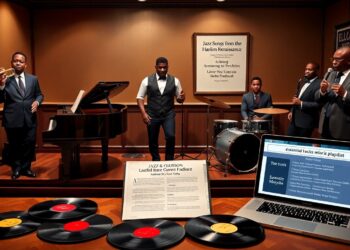

Harlem renaissance jazz music rose in New York in the 1920s. Musicians mixed African American folk songs, blues, and ragtime. Critics and listeners in the North heard new rhythms and phrasing. Artists recorded, performed in clubs, and toured. The music shaped tastes and helped writers, painters, and actors gain attention. This guide explains why harlem renaissance jazz music mattered and how it changed American culture.
Key Takeaways
- Harlem renaissance jazz music emerged in 1920s New York, blending African American folk, blues, and ragtime to create new rhythms that shaped American culture.
- Jazz served as a vital expression of Black identity during the Harlem Renaissance, influencing both artistic communities and social perceptions nationwide.
- Musicians innovated with improvisation, syncopation, and ensemble arrangements, establishing a distinct urban sound that moved from Harlem clubs to the national stage.
- Key figures like Duke Ellington and Louis Armstrong popularized Harlem renaissance jazz music, bringing it to mainstream audiences through performances, radio, and recordings.
- The movement’s musical advancements helped integrate Black artistry into broader American music genres and contributed to changing race relations.
- Harlem renaissance jazz music’s legacy endures by inspiring future musicians, influencing diverse music styles, and shaping cultural narratives about creativity and identity.
What Was The Harlem Renaissance And Why Jazz Mattered
The Harlem Renaissance was a cultural movement in New York from about 1918 to 1937. Writers, artists, and musicians gathered in Harlem. Jazz became a public language for Black expression. Audiences heard improvisation, syncopation, and new forms in clubs and on records. Leaders used jazz to claim dignity and visibility. Promoters and critics then linked Black modernism to American identity. So harlem renaissance jazz music carried artistic and social weight that changed opinion and policy.
Key Jazz Styles And Innovations Emerging In Harlem
Musicians in Harlem adapted small-group blues and larger dance-band formats. They experimented with rhythm, phrasing, and ensemble balance. Soloists expanded improvisation. Arrangers began to write parts that let sections interact. Bands used call-and-response and swung eighth notes to create forward motion. These features defined a new urban sound. Radio and records spread that sound. As a result, harlem renaissance jazz music moved from local clubs to national stages and influenced other genres.
Stride, Blues, And Early Swing: Musical Characteristics
Pianists played stride with a steady left hand and active right-hand melodies. Singers used blues phrasing to bend notes and to deliver raw emotion. Horn sections pushed toward tighter ensemble work and smoother transitions. Bands increased use of arranged solos, which created clearer forms. Tempo choices shifted from slow blues to medium and fast dances. These changes gave harlem renaissance jazz music both dance appeal and concert seriousness.
Pioneering Musicians Who Defined Harlem Jazz
A network of musicians, club owners, and impresarios shaped the scene. They trained young players and booked them in major venues. Musicians moved between Broadway shows, radio, and touring circuits. Critics and record labels then amplified certain names. That feedback loop created stars and shaped public taste. Through performance and recording, these artists fixed new standards. Their work made harlem renaissance jazz music a reference point for future generations of American musicians.
Duke Ellington And The Cotton Club; Bandleaders As Cultural Ambassadors
Duke Ellington led a band at the Cotton Club that reached national radio audiences. He wrote suites and short pieces that showcased orchestral color and soloists. Ellington used the band to test new ideas and to present Black artistry to white audiences. Other bandleaders did similar work by touring and recording. These figures carried harlem renaissance jazz music into mainstream culture and showed that Black composers and arrangers could lead large ensembles with vision.
Louis Armstrong, Bessie Smith, And Other Influencers
Louis Armstrong reshaped solo phrasing with clear tone and rhythmic drive. He made the solo a central expressive element in jazz. Bessie Smith brought blues power and commercial success through records. Younger players learned from their phrasing, timing, and tone. Instrumentalists and singers from Harlem then adapted these lessons to new contexts. Their models boosted popularity and created templates that spread across jazz, pop, and Broadway. They helped harlem renaissance jazz music reach wide audiences.
Legacy And Influence On American Music, Race Relations, And Popular Culture
Harlem artists changed the music business and American taste. Record companies and radio embraced jazz forms and performers. White and Black audiences then encountered Black artistry in shared spaces. That exposure altered cultural narratives about skill and creativity. Musicians trained future jazz innovators and influenced country, pop, and R&B. Writers and filmmakers borrowed jazz themes and rhythms. Over decades, scholars and artists have studied how harlem renaissance jazz music affected race relations and national identity.