Harlem renaissance music jazz changed daily life in 1920s New York. The phrase harlem renaissance music jazz captures how musicians wrote new songs, created new rhythms, and reshaped public taste. Historians note that harlem renaissance music jazz linked art, politics, and social life. Musicians moved from small clubs to big stages. Their music reached radio listeners, record buyers, and dancers across the nation.
Key Takeaways
- Harlem Renaissance music jazz revolutionized 1920s New York by introducing new rhythms and reshaping public taste.
- Jazz in Harlem connected art, politics, and social life, becoming a symbol of racial pride and cultural achievement.
- Distinctive musical traits like syncopation, call-and-response, and blue notes defined Harlem Renaissance music jazz from earlier styles.
- Key musicians such as Louis Armstrong, Duke Ellington, and Billie Holiday expanded jazz’s technical standards and emotional range.
- Iconic venues like the Cotton Club and Savoy Ballroom played crucial roles in popularizing Harlem Renaissance music jazz.
- Recordings, radio broadcasts, and touring transformed Harlem Renaissance music jazz from a local phenomenon into a nationwide commercial force.
The Soundtrack Of A Cultural Rebirth: Jazz In 1920s Harlem
Harlem embraced harlem renaissance music jazz as a public language. Bands played for black audiences and mixed crowds. Community leaders used harlem renaissance music jazz to promote racial pride and artistic excellence. Critics wrote about new concerts and new recordings. Poets and painters referenced harlem renaissance music jazz in magazines and shows. Nightlife and daytime salons both featured improvisation, syncopation, and a direct emotional style. The music tied social change to visible cultural achievement.
Musical Characteristics That Defined Harlem Jazz
Harlem jazz showed strong rhythms, call-and-response patterns, and blue notes. Musicians used syncopation and swing to change dance and listening habits. Arrangers added horns, clarinets, and driving piano lines. Vocalists used emotive phrasing and improvisation to shape lyrics. These traits made harlem renaissance music jazz distinct from earlier ragtime. Solo breaks and collective riffs gave the music a sense of urgency. The sound allowed both showmanship and intimate expression within one set.
Key Musicians And Bandleaders Shaping The Scene
Leaders and soloists drove the rise of harlem renaissance music jazz. They arranged new forms, led touring bands, and recorded key tracks. City audiences learned new styles from live sets and records. Promoters and agents booked major acts for theaters and clubs. These musicians balanced artistic goals with commercial demand. They trained younger players and expanded repertory. Their influence shaped how later generations played and heard jazz.
Louis Armstrong, Fletcher Henderson, And Sidney Bechet
Louis Armstrong led with bold trumpet solos and clear phrasing that changed harlem renaissance music jazz soloing. Fletcher Henderson arranged horns and set templates for big bands. Sidney Bechet played soprano sax with wide vibrato and bright tone. Armstrong recorded tracks that reached national buyers. Henderson’s charts moved small group ideas into larger ensembles. Bechet’s style influenced melodic choices for wind players. Together they raised technical standards and broadened public taste.
Duke Ellington, Bessie Smith, And Billie Holiday
Duke Ellington composed suites and club pieces that showcased harlem renaissance music jazz as art music. Bessie Smith brought blues power to popular audiences and to record sales. Billie Holiday used intimate phrasing and borrowed blues timing to shape emotion. Ellington’s band invented textures with clarinet and muted trumpet. Smith’s records sold widely and validated black performance as profitable. Holiday’s work later influenced singers across genres. Each artist expanded the public idea of what jazz could express.
Iconic Venues And Nightlife Culture: Cotton Club, Savoy, And Rent Parties
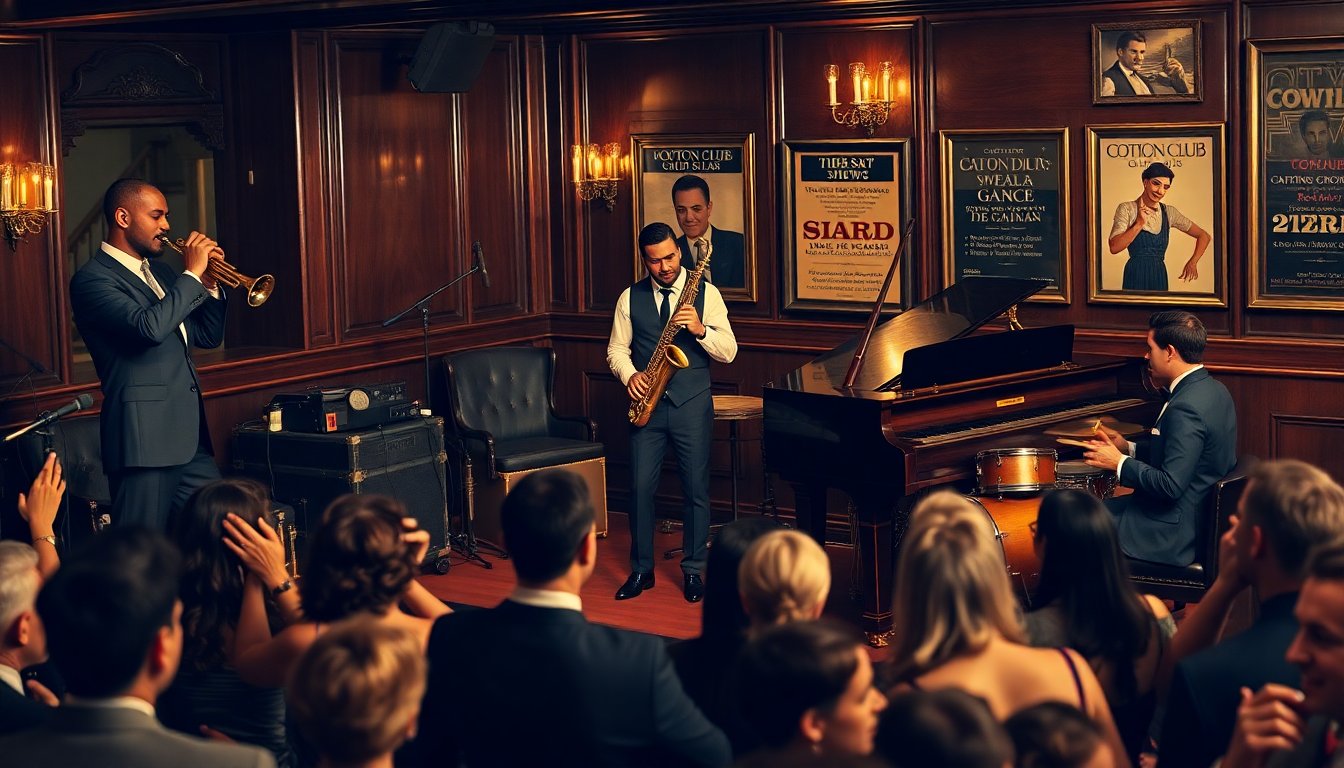
Clubs and private parties made harlem renaissance music jazz visible and profitable. The Cotton Club staged polished revues for white tourists while employing black musicians. The Savoy Ballroom hosted integrated dancing and fast-paced bands. Rent parties offered pay-to-enter shows in private homes and helped musicians earn steady income. These venues let players test new pieces and refine solos. They also created local celebrity and drew talent from other cities. Venue culture shaped the performance standards and social role of the music.
Recordings, Radio, And The Business Of Jazz: How the Sound Spread Nationwide
Record companies signed harlem renaissance music jazz bands and sold shellac discs across the U.S. Radio stations broadcast live sets and recorded tracks to wide audiences. Copyright and publishing firms monetized popular songs and paid royalties. Touring circuits moved acts from Harlem to Chicago, Detroit, and Kansas City. Press reviews and record charts raised profiles and helped book larger halls. These business practices turned local practice into national culture and made harlem renaissance music jazz a commercial force.