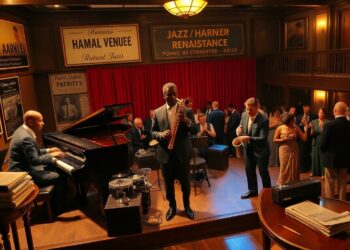
Jazz in Harlem Renaissance rose as a public voice for Black artists. The music mixed blues, ragtime, and African rhythms. It drew local musicians and traveling players. It gave communities a shared rhythm and a new cultural identity. It fed writers, painters, and dancers. It helped Harlem reach national attention in the 1920s and early 1930s.
Key Takeaways
- Jazz in Harlem Renaissance became a powerful cultural voice for Black artists, blending blues, ragtime, and African rhythms to create a new shared identity.
- The migration of musicians to Harlem and venues like the Cotton Club and Savoy Ballroom helped jazz gain national attention in the 1920s and early 1930s.
- Musical innovations in harmony, rhythm, and form, such as call-and-response and swing, shaped jazz in Harlem Renaissance into influential styles with lasting impact.
- Improvisation and swinging rhythms made jazz in Harlem Renaissance a dynamic art form that connected deeply with audiences through dance and emotion.
- Iconic artists like Louis Armstrong, Duke Ellington, and Bessie Smith pioneered new techniques and elevated jazz during the Harlem Renaissance, setting enduring standards.
- Clubs, dance halls, and social events in Harlem provided essential platforms for musicians to innovate, perform, and propel jazz into mainstream culture.
Why Jazz Became The Soundtrack Of A Cultural Awakening
Jazz in Harlem Renaissance grew from social change and migration. Musicians moved from the South to Harlem and brought songs and practices. Clubs and rent parties created steady work for players. Critics and patrons began to notice the music and the artists. Writers and painters absorbed the sound and used it in their art. The music gave a clear sonic language for pride and protest. Record labels and radio amplified jazz in Harlem Renaissance and pushed the sound into mainstream markets.
Support authors and subscribe to content
This is premium stuff. Subscribe to read the entire article.