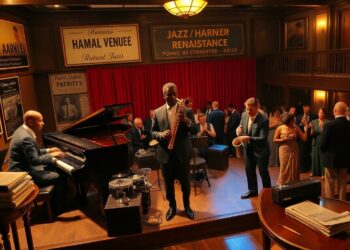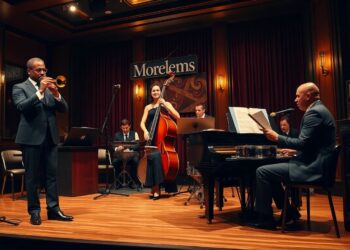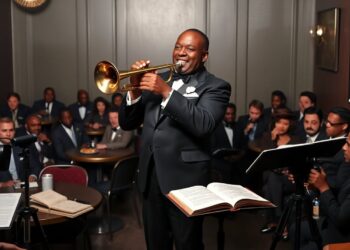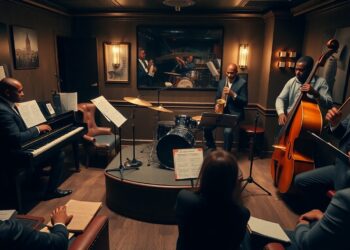
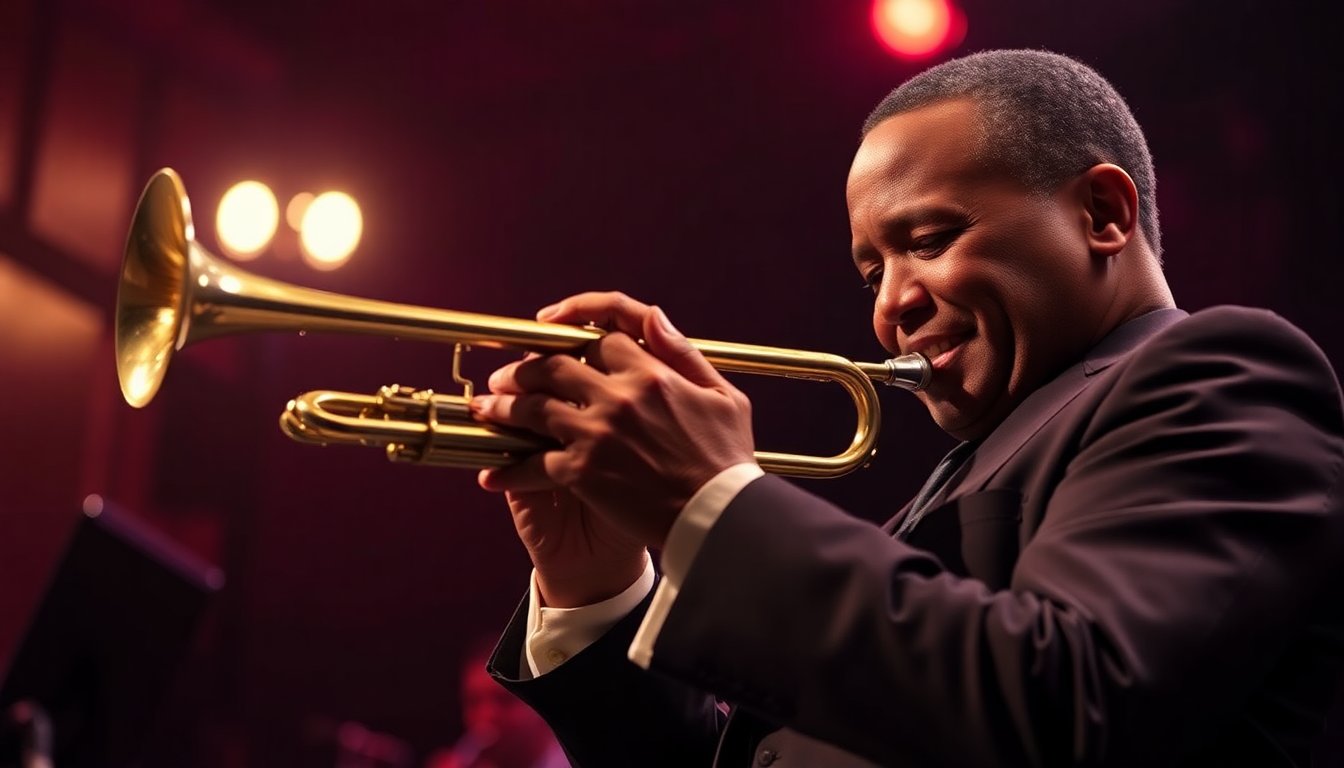
What explains Louis Armstrong’s significance to jazz during the Harlem Renaissance? The question focuses on his sound, his role, and his reach. He changed how soloing worked. He made jazz a mass art form. He shaped public views of Black musicians. This article lists clear reasons. It ties his life, recordings, and public persona to the larger cultural shift in the 1920s.
Key Takeaways
- Louis Armstrong revolutionized jazz during the Harlem Renaissance by pioneering solo-centric performances that elevated individual expression within the genre.
- His recordings with the Hot Five and Hot Seven made jazz accessible to a national audience through radio and records, transforming it into a mass art form.
- Armstrong’s innovative trumpet techniques, including his tone and rhythmic swing, set new standards that influenced generations of jazz musicians.
- He shaped public perceptions of Black musicians by cultivating a charismatic public persona that appealed to diverse audiences and challenged racial boundaries.
- Armstrong’s conversational improvisational style taught musicians to create expressive, narrative solos, raising the artistry of jazz soloing.
- His long-term influence endures in jazz education and performance, as subsequent styles like bebop and swing built upon his groundbreaking work.
The Cultural And Musical Landscape Of The Harlem Renaissance
The Harlem Renaissance changed American culture and music. Artists and writers in Harlem promoted Black creativity and pride. Jazz moved from local dance halls to theaters and clubs. Musicians mixed blues, ragtime, and popular song. Audiences grew in cities and on radio. What explains Louis Armstrong’s significance to jazz during the Harlem Renaissance ties to this shift. He arrived when Harlem needed a clear musical leader. He offered a style that matched the movement’s energy and public ambitions.
Support authors and subscribe to content
This is premium stuff. Subscribe to read the entire article.