Mintons has defined English porcelain since the early 1800s. This guide gives clear facts on Minton history, common marks, and value drivers. It helps collectors spot originals, estimate dates, and assess condition. The text avoids opinion and gives practical steps collectors can use when they examine a piece or research a lot.
Key Takeaways
- Mintons, founded in 1793 in Staffordshire, is renowned for English porcelain featuring distinctive styles from transfer-printed blue designs to Art Nouveau motifs.
- Collectors can identify and date Mintons pieces by examining marks, materials, patterns, and weight, using reference tables and auction records for accuracy.
- Key Minton marks include early green printed stamps, mid-century impressed or crossed-swords marks, and post-1891 marks with “England” indicating export wares.
- Material types like earthenware, bone china, Parian, and hard-paste porcelain show varying weight and translucency, aiding era identification.
- Authentication involves checking for repairs and provenance documentation, as condition and restoration significantly affect market value.
- Understanding pattern styles—from blue transfer prints to gilded hand-painted florals and Japonisme—helps pinpoint production periods and value drivers.
What Is Minton? History, Key Periods, And Signature Styles
Mintons refers to a Staffordshire firm that William Minton founded in 1793. The company produced earthenware and porcelain that collectors now prize. It expanded after 1816 when Thomas Minton joined and developed new techniques. Mintons moved into bone china and hard-paste porcelain and supplied services to royal and export markets.
The early period, 1793–1830, shows transfer-printed wares and bold blue designs. The mid-Victorian period, 1830–1880, shows colored enamels, gilt work, and Oriental-inspired motifs. The late 19th century shows Art Nouveau influences and larger decorative pieces. In the 20th century, Mintons adapted to new tastes and kept a presence in domestic and museum collections.
Collectors look for signature styles such as brightly colored floral sprays, Gothic revival shapes, and detailed figural scenes. Mintons often used vibrant overglaze enamels and gilding. They also produced tiles and parian figures that differ from their tableware in texture and weight.
Mintons pieces vary in weight and translucency. Early earthenware feels heavier and less translucent than later bone china. Later porcelain feels thin and shows light through the edge. These physical cues help collectors separate production eras.
Mintons also worked with notable designers and artists. Those collaborations yield marked series and limited runs that carry higher interest and value. Museums and auction records often list designer names alongside the factory name, which helps date a piece precisely.
How To Identify, Date, And Authenticate Minton Pieces
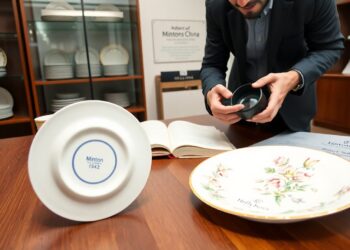
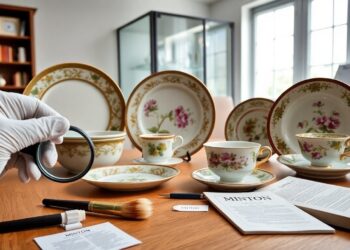
Collectors inspect marks, materials, pattern, and condition to identify Mintons. They first check the base for stamped or painted marks. They then compare the mark to dated references and auction records. They also feel the ware for weight and translucency. They examine glaze texture and the fineness of painted detail.
Experts use a simple step sequence. Step one: photograph the whole piece and the base. Step two: note the dominant colors, decoration style, and any impressed numbers. Step three: match the mark to a dated table in a reference book or museum database. Step four: compare similar listed lots to see typical price ranges and condition notes.
Dating relies on mark changes, pattern shifts, and material feel. Early green printed marks suggest early 19th-century transfer ware. Crowned or impressed Minton marks appear in mid-century pieces. The use of the word “England” on a mark generally dates a piece to after 1891, when export laws required country names. Postwar marks tend to be simpler and include factory addresses or codes.
Authentication also considers repairs and restorations. Collectors test for hairlines, in-painting, and replaced handles. Professional restorers use ultraviolet light to reveal retouching. Collectors factor restoration into value estimates because repairs reduce market price.
Provenance and documentation raise confidence. Receipts, old auction catalog entries, and estate notes help confirm a piece. When provenance is missing, collectors rely on a combination of marks, material, and known production traits to build a likely date and origin.
Common Minton Marks, Materials, And Pattern Clues
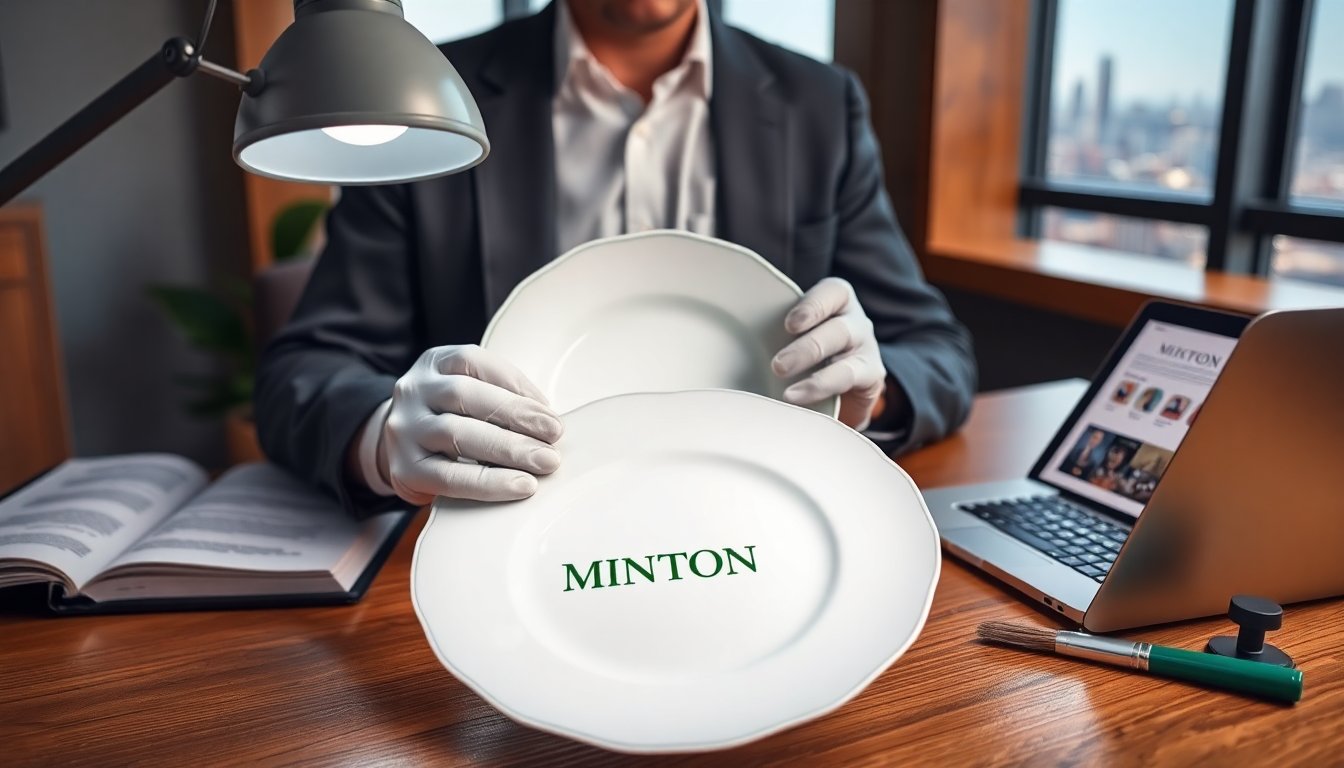
Mintons used several marks that evolved by decade. The green printed MINTON mark on transfer ware suggests early 19th-century production. A crossed-swords style or impressed MINTON mark with a date numeral points to mid-century factory practice. Marks that include “England” or artist initials point to later 19th and 20th-century export wares.
Material clues help too. Earthenware feels dense and may show coarse glaze crazing. Parian has a matte, slightly porous surface and small, crisp mold lines. Bone china shows fine translucency: collectors hold a cup to the light to check thinness. Hard-paste porcelain feels cool and sound when tapped with a fingernail.
Pattern clues speed identification. Transfer-printed blue scenes usually date to 1800–1850. Hand-painted floral bouquets with heavy gilding often date to 1830–1900. Japonisme motifs and raised enamel work often indicate late 19th-century pieces. Art Nouveau stylings and flowing lines suggest work from the 1890s to the 1910s.
Numbers and impressed codes on bases can refer to shape lines or decorator batches. Collectors record any impressed numbers and search factory records or specialist forums. Shape books and pattern indexes often list matching numbers and show production dates.
Condition impacts value strongly. Chips and large restorations reduce interest. Light surface wear or minor gilt loss is common and affects price less. When evaluating for resale, collectors apply a condition rating and compare with recent auction results for similar-rated pieces.