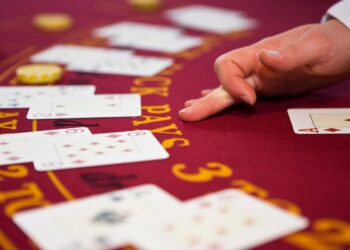

Spades are more than counting cards and hoping your partner “gets it.” The spades card game is a fast-paced lesson in social intelligence: reading intent with limited information, coordinating silently, and managing trust when incentives do not perfectly align. Those skills matter off the table too, because social connection is tightly linked to health and performance.
How does Spades turn partnership into a practical test of social intelligence?
Atomic Answer: Spades make social intelligence measurable because you win as a pair, not as an individual. You must infer your partner’s plan from bids and play, support it without overcommitting, and recover when information changes. That cycle trains perspective-taking, calibrated trust, and cooperative problem-solving under time pressure.
Spades is typically played as a partnership trick-taking game with bidding, where teammates combine bids and try to meet their contract while avoiding excess “bags” (overtricks). That structure creates a social problem you cannot solve alone: your hand is private, your partner’s hand is private, and both opponents are actively trying to disrupt coordination.
This is where social intelligence shows up in concrete behaviors:
- Perspective-taking: “What line of play does my partner likely need from me?”
- Coordination without speech: bidding and card play become constrained signals.
- Trust management: you sometimes sacrifice a personal trick to protect the team contract.
Over time, good players stop thinking “my tricks” and start thinking “our contract,” which is a useful shift in many real-world collaborations.
Why does bidding in Spades train inference and communication under constraints?
Atomic Answer: Bidding trains inference because it compresses complex information into a single number that your partner must interpret and use. You learn to communicate confidence without overpromising, and to decode what a bid implies about suit strength, risk tolerance, and possible special plays like nil. This is low-bandwidth, high-stakes signaling.
In Spades, each player bids expected tricks; partners’ bids are added, and spades are always trump. A “nil” bid declares an intent to take zero tricks and is scored with a bonus or penalty depending on success. Even without house conventions, bidding forces you to communicate something precise under uncertainty.
This is essentially structured inference:
- You estimate outcomes given partial information (your hand, visible plays).
- You send a summary signal (your bid).
- You interpret your partner’s signal and update your plan.
That’s very similar to real teamwork where you cannot fully explain everything, so you rely on concise commitments, shared rules, and quick adjustments.
How do “bags,” setting opponents, and nil bids teach reputation and fairness?

Atomic Answer: Spades scoring creates social accountability. Overtricks (“bags”) can become a future penalty, so partners must balance safety with precision. Nil bids add risk that teammates must cover. Because repeated hands reward consistency, players quickly learn that selfish grabs and sloppy bidding damage reputation and reduce long-run win rate.
Many rule sets treat extra tricks as “bags,” and some apply a penalty after accumulating 10 bags. That discourages mindlessly taking every available trick and pushes teams toward fairness within the partnership: do not force your teammate into impossible math, do not chase personal glory at the cost of team control.
Nil introduces a clear trust dilemma. The nil bidder needs protection from being forced to take a trick, while the partner must still make the team’s contract. Good teams handle this with predictable norms: when to attempt nil, how to “cover,” and when to abandon nil to save the set. The important part is social, not mechanical. Your partner is constantly judging whether your choices are reliable.
That mirrors real collaboration: short-term “wins” that increase risk for the group tend to be punished over repeated interactions.
How does gameplay build real-time mind-reading through attention and context?
Atomic Answer: Spades build real-time social prediction because you must track what people likely want, not just what they can do. Leads, sloughs, and timing reveal preferences and constraints. You learn to read patterns, anticipate reactions, and choose plays that shape others’ options. This is situational awareness applied to people.
Once bidding ends, players must follow suit if possible; otherwise they can play off-suit or trump with spades. That rule creates meaningful “tells” in the legal moves themselves. If someone cannot follow suit, you learn something about their hand shape. If an opponent burns a high spade early, you infer priorities: are they protecting a nil, trying to set, or securing control?
This is social intelligence in motion:
- Attention control: watching what is played, not just your own plan.
- Context use: interpreting plays relative to the contract and score.
- Prediction: choosing lines that influence what others are forced to do next.
Strong players also manage interpersonal dynamics: they avoid chaotic play that confuses a partner, and they prefer lines that keep decisions simple and legible.
What does research say about social connection, health, and performance that supports social play?
Atomic Answer: Social connection is strongly associated with health outcomes, and brief breaks can support day-to-day functioning. A meta-analysis of 148 studies (308,849 participants) found stronger social relationships linked to a 50% higher likelihood of survival (OR = 1.50). Chronic loneliness has also been linked to a 56% higher stroke risk in older adults.
The point is not that Spades “prevents disease,” but that social interaction is not a trivial add-on. In Holt-Lunstad and colleagues’ meta-analysis, people with stronger social relationships had a 50% increased likelihood of survival (OR = 1.50) across a very large evidence base. Separately, a study in eClinicalMedicine reported that chronic loneliness was associated with higher stroke risk, commonly summarized as about 56% higher risk in persistently lonely older adults.
From a productivity angle, short, bounded breaks can help too. A meta-analysis on micro-breaks synthesized 22 independent samples (N = 2,335) and examined effects on well-being (vigor and fatigue) and performance. A quick Spades hand with friends or coworkers can function as a structured social reset, as long as it stays time-boxed and does not become an avoidance loop.
Spades works particularly well because it makes interaction purposeful: you are cooperating, interpreting, and adapting together, not just talking past each other.
How can beginners practice Spades “socially” so partnership skills improve fast?
Atomic Answer: Beginners improve fastest when they treat each hand as a communication exercise. Use a short pre-hand agreement on basic expectations, keep bids realistic, and do a two-minute debrief after each game: what the bid implied, where support was needed, and which plays were ambiguous. This builds shared language and trust quickly.
A simple, non-fluffy practice routine:
- Before playing: agree on one or two basics (for example, whether you allow nil, and how seriously you treat bag penalties).
- During bidding: bid conservatively until you can explain your number in one sentence.
- After the hand: ask two questions: “What did you think my bid meant?” and “When did you need help?”
That last step is the whole game. The spades card game rewards teams who reduce misunderstanding. When you make your decisions easier to read, your partner spends less effort decoding you and more effort executing a winning line.