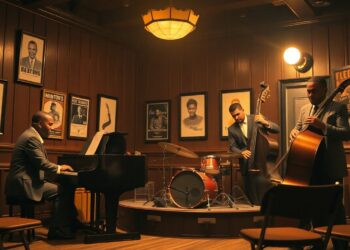
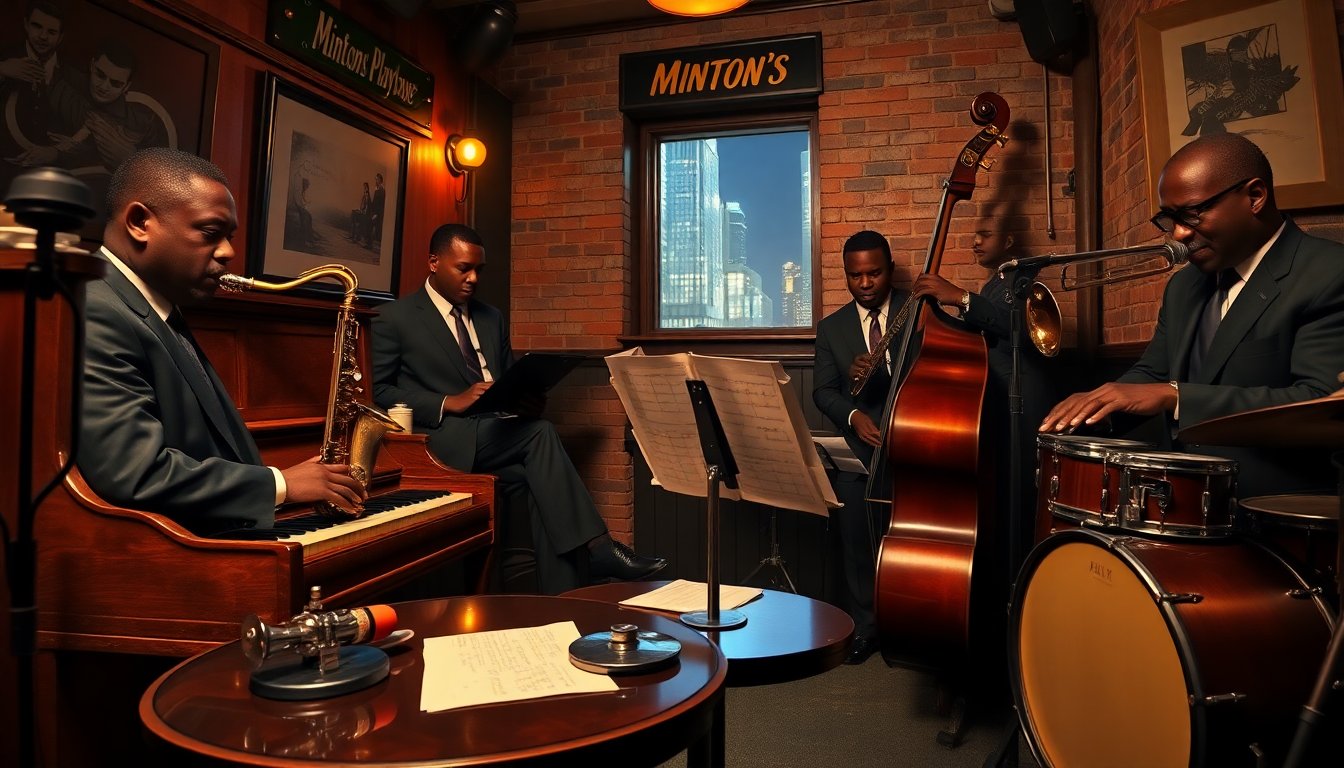
Minton’s Playhouse changed jazz in Harlem. Minton’s jazz sessions pushed musicians to play faster and think differently. The club gave players time to test ideas late at night. The house encouraged risk and musical debate. This article explains why Minton’s mattered, how the club worked, how jam sessions sparked new music, and who led the change.
Key Takeaways
Minton’s jazz in Harlem revolutionized the genre by fostering late-night jam sessions that encouraged risk-taking and musical innovation.
The club provided a supportive community for Black musicians during segregation, allowing them to experiment beyond traditional dance-band norms.
Minton’s Playhouse’s culture of call-and-response and long solos created a musical laboratory where bebop’s fast tempos and complex harmonies were developed.
Key figures like Thelonious Monk shaped bebop by introducing unique phrasing, dissonant chords, and structures that allowed creative improvisation.
Minton’s jazz sessions pushed players to think quickly and inventively, influencing the evolution of modern jazz styles beyond the club itself.
Why Minton’s Mattered: Social And Musical Context In 1930s–40s Harlem
Mintons jazz mattered because the club served a tight community of Black musicians in Harlem. The venue opened during an era of segregation and intense touring schedules. Musicians used Minton’s jazz as a place to rest, eat, and trade ideas after shows. The scene pressed players to stretch rhythm and harmony beyond dance-band norms. Younger players pushed chord changes, altered time feel, and tested solos. Older players brought craft and technique. The mix produced urgency and invention. Audiences at Minton’s jazz heard music that did not fit commercial radio. That gap let artists shape new language on their own terms.
The Club, The Owners, And The Late-Night Scene
Minton’s Playhouse opened above a bar on 118th Street. The owners, Henry Minton and later Randy Weston’s circle, kept the club small and late. The space had low light and a packed room. The schedule pushed sets past midnight. Players could stay for hours. The late-night hours let musicians take risks without paying commercial penalties. The club’s rules encouraged call-and-response, long solos, and trading fours. Bookers favored players who could think on their feet. That culture made Minton’s jazz feel like a lab. Musicians came back night after night to refine their ideas.
How Jam Sessions At Minton’s Sparked Bebop Innovation
Jam sessions at Minton’s jazz forced immediate invention. Leaders set fast tempos and tricky changes. Horn players answered piano cues and bass lines. Drummers added syncopation and surprise accents. The format required short rehearsal and lots of listening. Players learned to compress phrases and outline unusual chord tones. They tested altered dominants and chromatic lines in real time. The club rewarded originality with applause and regular work. Musicians who failed learned quickly and returned with sharper ideas. Over months, these habits hardened into a new style built on speed, dissonance, and tight rhythmic interplay.
Key Figures Who Shaped Bebop
A small group of players carried the new language from Minton’s jazz into recordings and other scenes. They kept the club’s ideas alive by teaching younger players and by pushing bandleaders to accept new material. Each key figure added a distinct voice. The group included a pianist who set session practices, an alto player who rewrote solo phrasing, and a trumpeter who expanded harmony and stage presence. Their work made bebop a coherent style, not just a set of tricks.
Thelonious Monk: Pianist, Composer, And Session Architect
Thelonious Monk played regularly at Minton’s jazz. He used sparse chords and odd rhythms to frame soloists. He set tests that forced players to rethink phrasing. Musicians copied his use of dissonant intervals and unexpected rests. Monk wrote tunes that fit the club’s tests and that other bands la